Automotive Diagnostics in Austin
You Don't Need to Know What's Wrong With Your Car. That's Our Job.
A check-engine light. A car that won't start. A strange noise that only happens sometimes. An A/C system that stopped cooling. A battery that keeps going dead.
Whatever brought you here, you don't need to diagnose the problem before bringing your vehicle to Newberry.
Tell us what the vehicle is doing, when it happens, and anything else you've noticed. We'll take it from there.
Diagnostics Are More Than Reading a Trouble Code
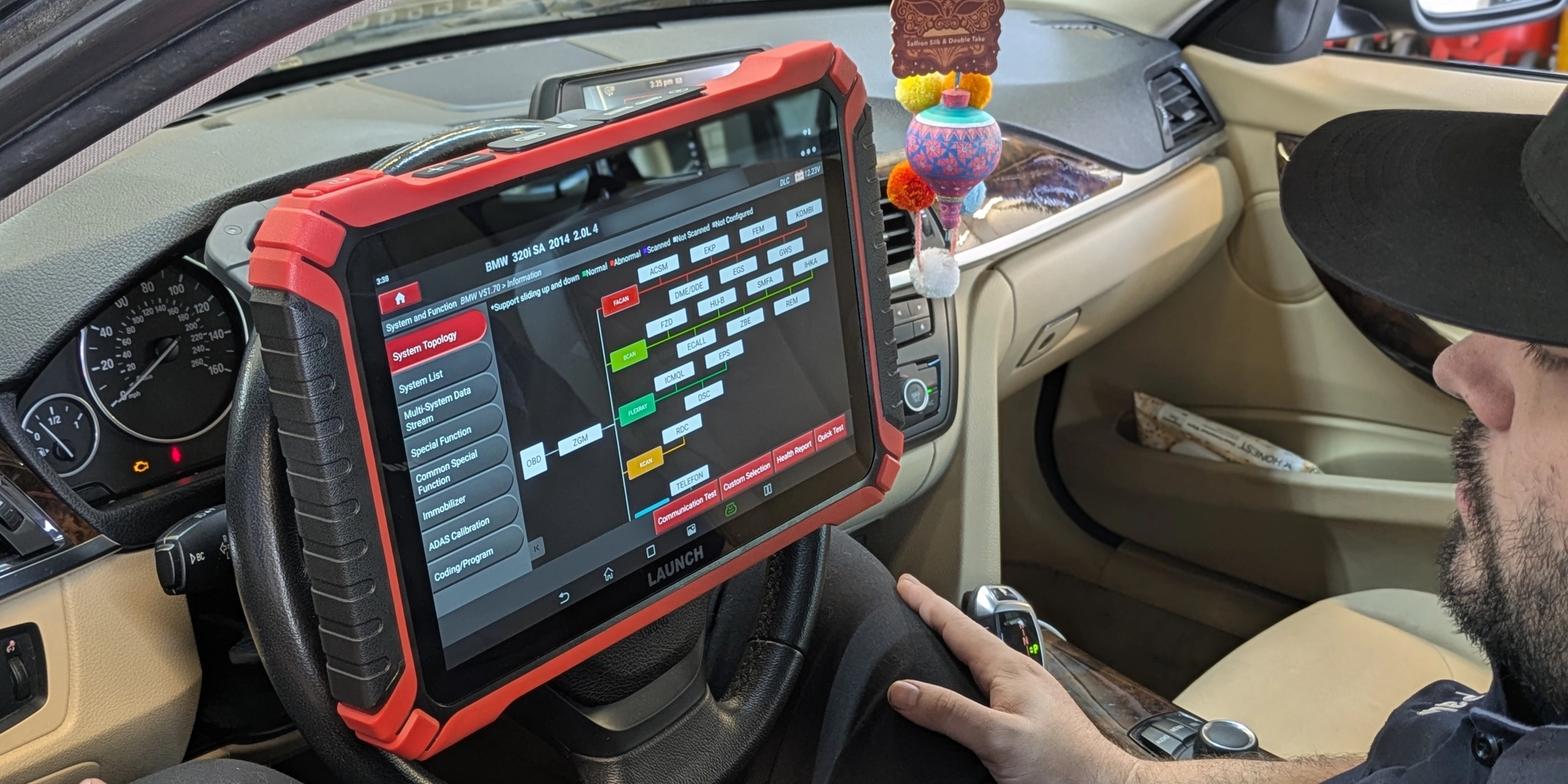
When a warning light is on, we start by performing a complete system scan of the vehicle.
Modern vehicles have multiple computer systems capable of storing faults, and looking at the vehicle as a whole can provide important information about what's actually happening.
Sometimes a trouble code points us toward a relatively straightforward problem. Other times, the code identifies a system or condition that requires additional testing to determine the actual cause.
That's an important distinction:
A trouble code is a starting point. It isn't always the answer.
That's why we recommend a proper diagnostic evaluation. A quick parts-store-style code report can't always tell you what's actually causing the problem.
What Can We Diagnose?
Diagnostics cover a wide range of vehicle problems.
We regularly investigate problems such as:
- Check-engine and other warning lights
- No-start and hard-start conditions
- Intermittent stalling
- Rough running and drivability problems
- Batteries that repeatedly go dead
- Electrical problems
- Overheating
- A/C systems that aren't cooling properly
- Noisy brakes
- Unusual noises and vibrations
- Fluid leaks
- Failed emissions inspections
- Intermittent problems that are difficult to reproduce
Sometimes the complaint is simply, "Something doesn't feel right."
That's okay too.
The diagnostic process depends on the problem. Diagnosing a noisy brake is different from tracing an electrical fault, and an overheating problem requires different testing than a check-engine light.
Our job is to determine the right place to start.
How We Find the Problem
Depending on the symptoms and what we find during our initial evaluation, diagnostic work may include:
- Complete system scanning
- Live-data analysis
- Electrical testing
- Wiring-diagram tracing
- Component testing
- Fuel and ignition testing
- Pressure testing
- Smoke testing
- Road testing
- Intermittent-fault tracing
- Vehicle programming when needed
We use the appropriate testing to determine what's actually causing the problem before recommending a repair.
EVAP Problems: Test the System Before Replacing Parts
EVAP codes are a good example of why reading a trouble code isn't the same as diagnosing a vehicle.
Sometimes the problem really is as simple as a loose or failed gas cap.
But not always.
Properly diagnosing an EVAP fault requires testing the system to determine whether it is actually leaking or whether there is a mechanical fault somewhere within the system.
At Newberry, we're experienced with EVAP smoke testing. A proper smoke test takes time, but it's necessary to verify the problem and reduce the chance of clearing the code only to have the check-engine light return.
Automatically replacing the gas cap, clearing the code and hoping for the best can bring the light right back. We'd rather find out what's actually happening.
Sometimes the Most Useful Diagnostic Tool Is You
Intermittent problems can be some of the hardest problems to diagnose.
Maybe the vehicle makes a noise only when it's cold. Maybe it vibrates at a certain speed. Maybe it wouldn't start yesterday but works perfectly by the time it reaches our shop.
Those details matter.
We'll ask questions about when and how the problem occurs. For particularly difficult problems, we may have more than one person road-test the vehicle in an effort to reproduce the symptom. When it makes sense, we'll road-test the vehicle with you.
Photos and videos can also be extremely helpful.
If your vehicle makes a strange noise that disappears before you reach us, record it if you can safely do so. Even details such as the color or smell of a fluid leak can help point us in the right direction.
The more information you can give us, the better place we have to start.
Why Is There a Diagnostic Charge?
Diagnosis is part of the repair process, but finding the problem and fixing the problem are two different jobs.
Determining the cause of a problem can require scanning the vehicle, testing components, reviewing live data, tracing wiring, smoke testing, road testing, or performing other tests before we know what actually needs to be repaired.
At Newberry, we list diagnostic labor separately from the price of the repair.
That way, you can see what you're paying for and understand the difference between determining the problem and performing the repair.
Most diagnostic work begins with up to one hour of diagnostic labor. If additional diagnostic time is necessary, we'll stop and discuss it with you before proceeding further.
Some evaluations, such as certain brake checks, may have the diagnostic charge waived when the related repair is performed.
Once We Find the Problem
Once we've identified the cause, we'll prepare an estimate explaining:
- What we found
- What is needed to repair it
- How serious the problem is, when applicable
Nearly every estimate is sent by text or email, giving you the information in writing so you can review it before deciding how you'd like to proceed.
We don't perform repairs without your authorization.
We Verify the Repair
The job isn't finished just because a part has been replaced.
We want to verify that the original problem has actually been corrected.
For a check-engine-light repair, that may mean clearing the codes, road testing the vehicle, monitoring the system, and checking whether faults return.
For other repairs, verification depends on what originally brought the vehicle to us. We may check for leaks, noises, overheating, vibration, proper operation, or whatever condition we were trying to correct.
Fix the problem. Then make sure it's fixed.
Domestic, Import & European Vehicle Diagnostics
Newberry diagnoses and repairs a wide range of domestic, Asian, and European vehicles.
As a general automotive repair shop, we work across many different makes, models, and vehicle systems.
We do not currently service fully electric vehicles or certain high-end luxury and exotic vehicles.
Not sure whether we work on yours? Call or text us and we'll let you know.
Having Car Trouble? Start With What You Know.
You don't need to tell us which sensor is bad or what part you think needs to be replaced.
Tell us:
- What the vehicle is doing
- When it happens
- What you've noticed
If you have a photo or video of the problem, even better.
We'll take it from there.


